In 1902, Rudyard Kipling paid £9,300 for a Jacobean manor house in the East Sussex village of Burwash. The purchase of Bateman's would bind the Nobel Prize-winning author to Sussex for the remainder of his life, and the Wealden landscape would shape some of his most celebrated works.
A Peaceable Place in the Weald
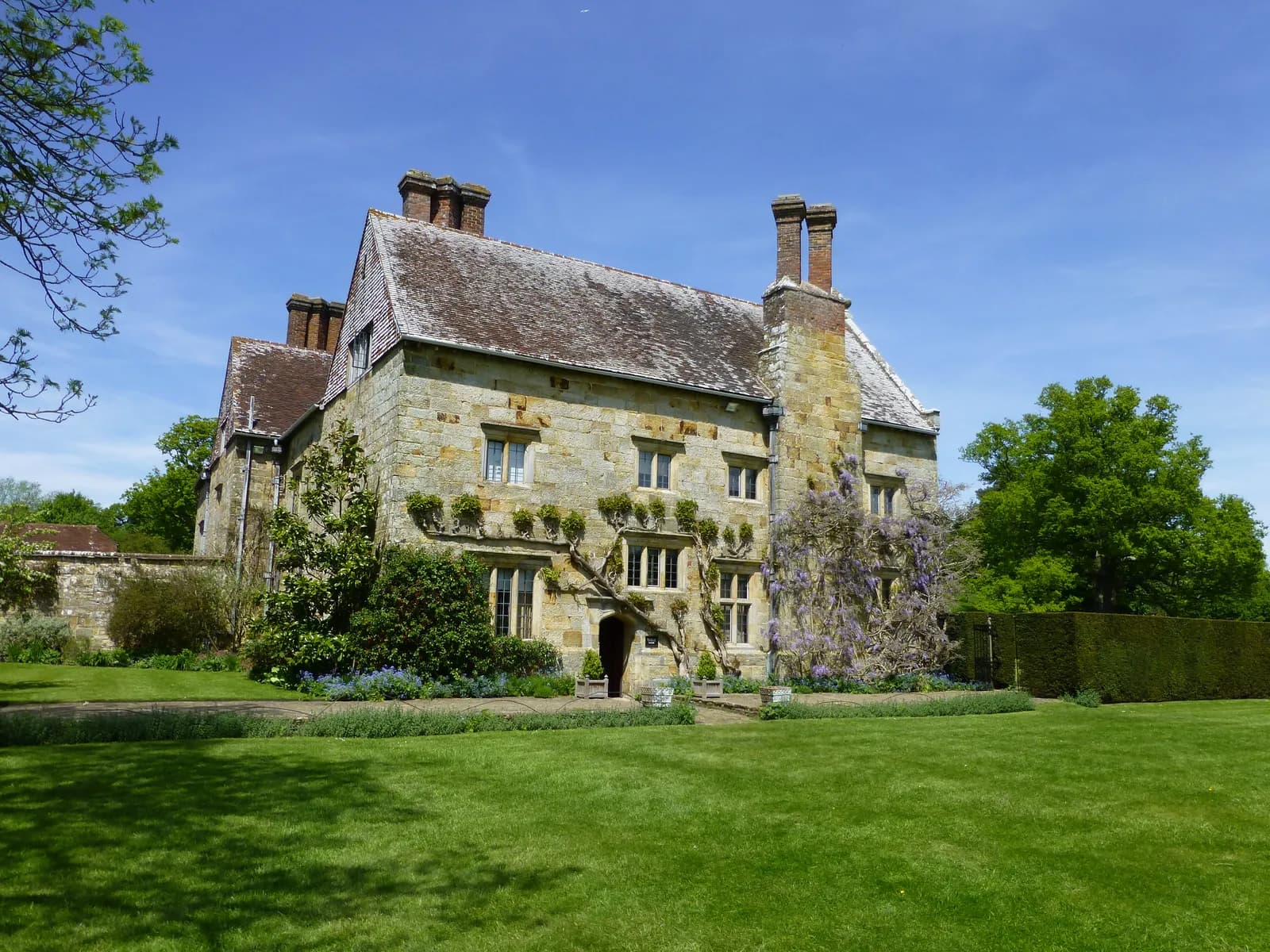
The sandstone mansion that became Kipling's sanctuary was built in 1634 to a double-pile plan, its two storeys topped with gables and mullioned windows. An impressive row of six diamond-shaped red brick chimney stacks rises from the roof, marking the property as a substantial yeoman's dwelling of the period.
Kipling first saw the house in 1900, and by 1902 he had completed the purchase. At the time, his annual earnings of £5,000 made the acquisition what he considered "entirely affordable." The property initially comprised 33 acres, though he would later expand the estate to over 300 acres.
The author was drawn to the location for reasons beyond its architectural merits. Kipling described Bateman's as "a good and peaceable place," untouched and authentic, with what he termed good "Spirit" or "Feng Shui." He noted there were "no shadows of ancient regrets, stifled miseries, nor any menace."
The Garden and the Mill
After receiving the Nobel Prize in Literature in 1907, Kipling invested a portion of the prize money in transforming the grounds. From that year, he set about creating the gardens that would become integral to the property's character. He designed a rose garden beside a lily pond, established an orchard, planted yew hedges, and cultivated a kitchen garden within what is now the Mulberry Garden.
The estate also includes Park Mill, an 18th-century working watermill on the River Dudwell. Kipling installed a dynamo there to generate electricity for the house, modernising the Jacobean property with plumbing upgrades and reconfigured kitchen and servant quarters designed by his cousin, architect Ambrose Poynter.
Sussex as Muse
The 34 years Kipling spent at Bateman's proved to be his most productive period. The house and its surrounding countryside feature prominently in his later works, particularly the children's books Puck of Pook's Hill (1906) and Rewards and Fairies (1910), the latter containing his poem "If—." Pook's Hill itself, visible from the property, lent its name to the former work.
Other Sussex-influenced works from this period include "The Glory of the Garden" and "The Land," the latter directly inspired by the estate. Just So Stories was published in the same year as the house purchase, marking the beginning of his creative relationship with the county.
The landscape Kipling cultivated and observed became inseparable from his literary output. The National Trust notes that "the 300 acres of the countryside estate around the house influenced works such as Puck of Pook's Hill, Rewards and Fairies and many of his poems."
Life in Burwash
Despite his international reputation, Kipling integrated into village life. The Bear public house on Burwash High Street maintains a dedicated Kipling room, reflecting his connection to the community. His visitors at Bateman's included his cousin Stanley Baldwin, who would later serve three terms as Prime Minister; fellow author Sir Henry Rider Haggard; his aunt Georgiana Burne-Jones, the artist; and explorer Sir Ernest Shackleton.
The Kipling family experienced profound loss during their years in Sussex. Their son John was killed in action at the Battle of Loos in 1915 during the First World War. His name appears on the village war memorial at the end of Bell Alley Lane. Rudyard Kipling died in London on 18 January 1936, aged 70, from peritonitis. His ashes were interred at Poets' Corner in Westminster Abbey.
The Kipling Legacy in Burwash Today
Following Kipling's death, his widow Carrie remained at Bateman's until her own death in 1939. She bequeathed the property to the National Trust, supported by their daughter Elsie, who maintained a close connection to the house throughout her life. Bateman's has remained in the Trust's care for over 85 years.
The house is now a Grade I listed building, designated in 1961, recognised for its exceptional architectural and historical interest. It contains nearly 5,000 individual pieces, including Kipling's Nobel Prize medal, a Rolls-Royce Phantom I, oriental items from India and the Far East, and paintings by Edward Poynter, Edward Burne-Jones, and James Whistler.
The village itself has honoured its most famous resident with a bronze statue installed in Burwash High Street in 2019, created by local sculptor Victoria Atkinson. The work stands as a permanent reminder of the writer who found his final home in the Sussex Weald.
Bateman's remains open to visitors, with the house and gardens preserved as they were in Kipling's time. Park Mill, which underwent restoration by the National Trust in 1975 and again between 2017 and 2020, continues to operate as a working watermill, grinding flour as it has for centuries.