On 14 October 1066, on a hill in East Sussex, the course of English history changed forever. The Battle of Hastings, fought at Senlac Hill near present-day Battle, saw Duke William of Normandy defeat King Harold II and launch a transformation that would reshape Sussex and the entire kingdom.
The Landing at Pevensey Bay
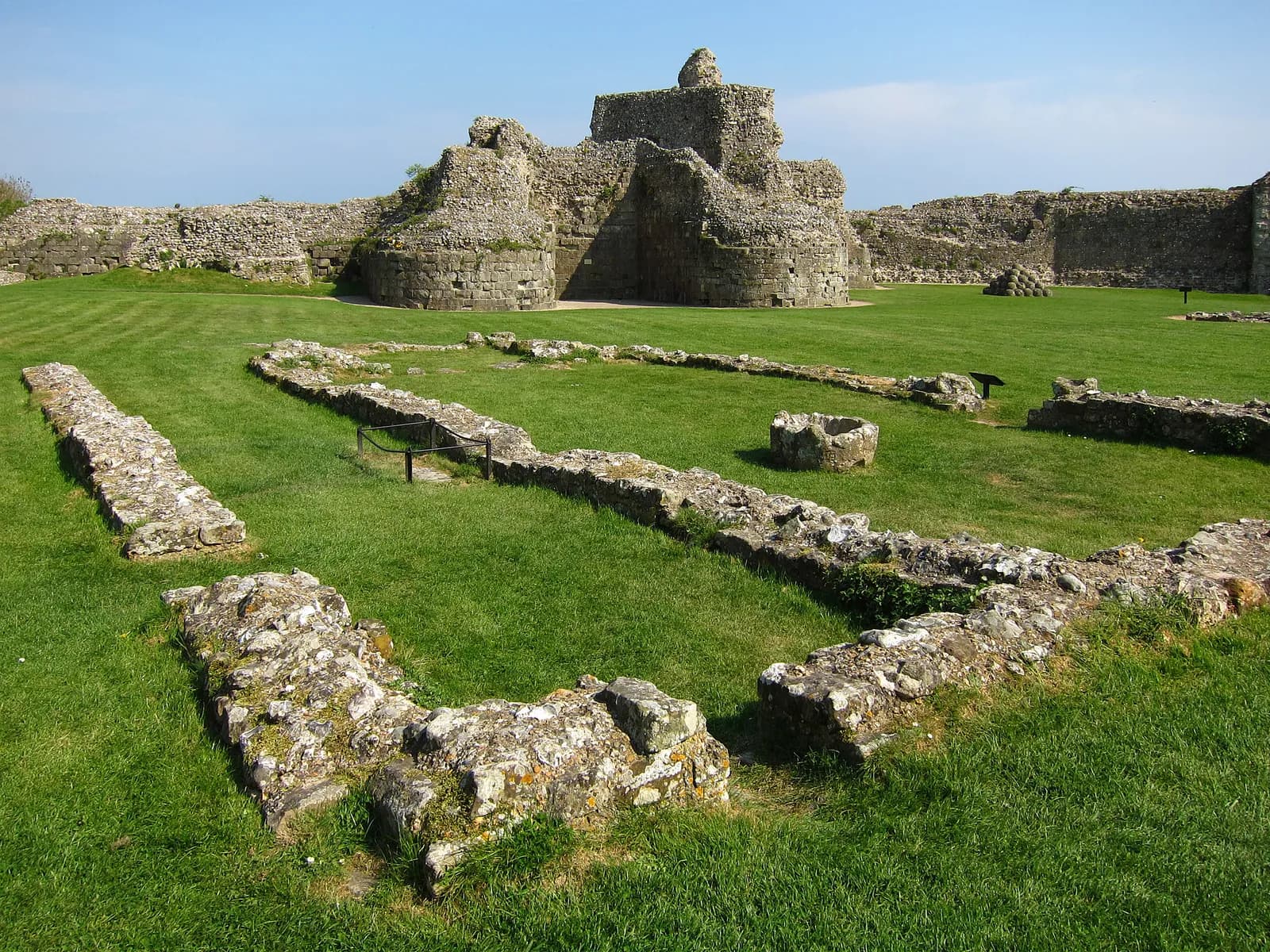
William's invasion began not at Hastings itself, but further east. On 28 September 1066, his fleet landed at Pevensey Bay, Sussex, bringing thousands of Norman soldiers onto English soil. The invaders sought shelter within the Roman fort of Anderitum, now known as Pevensey Castle. They repaired the ancient Roman walls and dug a defensive ditch across the causeway before moving west to establish a base at Hastings.
Pevensey's strategic significance was not lost on the Normans. The site would become a key Norman stronghold, granted to William's half-brother Robert, Count of Mortain, as part of the Rape of Pevensey. Over subsequent decades, the Normans added a stone keep and inner bailey within the Roman walls, creating a formidable fortress that guarded the Sussex coast for centuries.
The Battle on Senlac Hill
On the morning of 14 October 1066, the two armies met on Senlac Hill, roughly seven miles northwest of Hastings. The name derives from the Old English "Sandlacu," meaning sandy water. King Harold II occupied the high ground with his housecarls and fyrd, while William's forces advanced from the south.
The battle raged for the better part of a day. Harold's brothers, Gyrth and Leofwine Godwinson, were among the casualties. By evening, the English line had broken, and Harold himself was killed, reputedly struck in the eye by an arrow according to later accounts. William had won a decisive victory, though resistance to Norman rule would continue for several years.
Battle Abbey: Penance and Power
Following his coronation as King of England on Christmas Day 1066, William sought to mark the site of his victory. He had vowed to found a monastery should he prevail, and in 1070 construction began on Battle Abbey. The monastery was consecrated in 1094 and dedicated to St Martin of Tours.
The high altar was deliberately positioned on the spot where Harold fell, transforming a site of violence into sacred ground. This placement served dual purposes: an act of religious penance, ordered by Pope Alexander II, and a statement of Norman legitimacy. Battle Abbey was granted special privileges, including exemption from episcopal jurisdiction, placing it on a level with Canterbury.
A town gradually grew around the abbey, and today Battle, East Sussex, retains its medieval layout. The gatehouse and extensive ruins are now in the care of English Heritage, which operates the site as "1066 Battle of Hastings, Abbey and Battlefield."
The Rapes of Sussex: Norman Administrative Innovation
The Norman conquest brought a fundamental reorganisation of Sussex's governance. The county was divided into six administrative districts known as "rapes," each centred on a castle and borough. This system was unique to Sussex and reflected the Normans' need to secure their foothold on English soil.
The Rape of Hastings, which included the battlefield, Battle itself, and the coastal towns of Hastings and Rye, was granted to William's cousin Robert, Count of Eu. The Rape of Pevensey went to Robert of Mortain. Other rapes at Lewes, Bramber, Arundel, and Chichester completed the system. Each rape formed a compact unit for military and fiscal control, with its own castle serving as administrative headquarters.
Castles at Pevensey, Hastings, and Lewes became the centres of Norman power in Sussex. The pattern of building castles within or near existing fortifications, as seen at Pevensey with its Roman walls, was repeated elsewhere in England, most notably at the Tower of London.
Domesday and the Redistribution of Land
The Norman conquest brought massive changes to land ownership in Sussex. The Domesday Book of 1086 records the systematic transfer of estates from English elites to Norman followers. Estates held by Harold and his supporters were confiscated and granted to the new king's loyal barons.
This redistribution transformed Sussex society. Anglo-Saxon thegns were replaced by Norman lords. French became the language of government and the elite. The abbey at Battle acquired extensive lands, becoming one of the wealthier monastic houses in England until its dissolution in 1538.
What Remains Today
Visitors to East Sussex can still trace the events of 1066 across the landscape. At Battle Abbey, the gatehouse stands largely intact, and the ruins of the monastic buildings evoke the scale of William's foundation. A plaque marks the spot where Harold is said to have fallen. Nearby, a monument erected by the people of Normandy in 1903 commemorates the battle's fallen.
St Mary the Virgin church in Battle, consecrated in 1115, contains the Senlac window (1984) and the Battle Tapestry, completed in 2017 and modelled on the Bayeux Tapestry. The latter depicts local scenes and the town's history, created by community volunteers over several years.
Pevensey Castle remains open to visitors, its Roman curtain walls still standing in remarkable condition, with Norman additions visible. The site includes machine-gun posts from the Second World War, illustrating the continued military significance of this coastal position.
A Lasting Legacy
The events of 1066 left an indelible mark on Sussex. The county became the Normans' beachhead, the place where the conquest began and from which it spread. The rape system, the castles, and the abbey at Battle all testify to the transformation that began on that October day.
But the legacy extends beyond physical remains. The battle entered English folklore and historical memory, its outcome shaping the nation's language, law, and culture. The site at Battle remains one of the most visited historic locations in Britain, drawing visitors who come to stand where England's medieval history turned.
Sources: Wikipedia - Battle of Hastings; Wikipedia - Battle Abbey; Wikipedia - Battle, East Sussex; Wikipedia - Pevensey Castle; Wikipedia - Norman Conquest; Wikipedia - Rape of Hastings