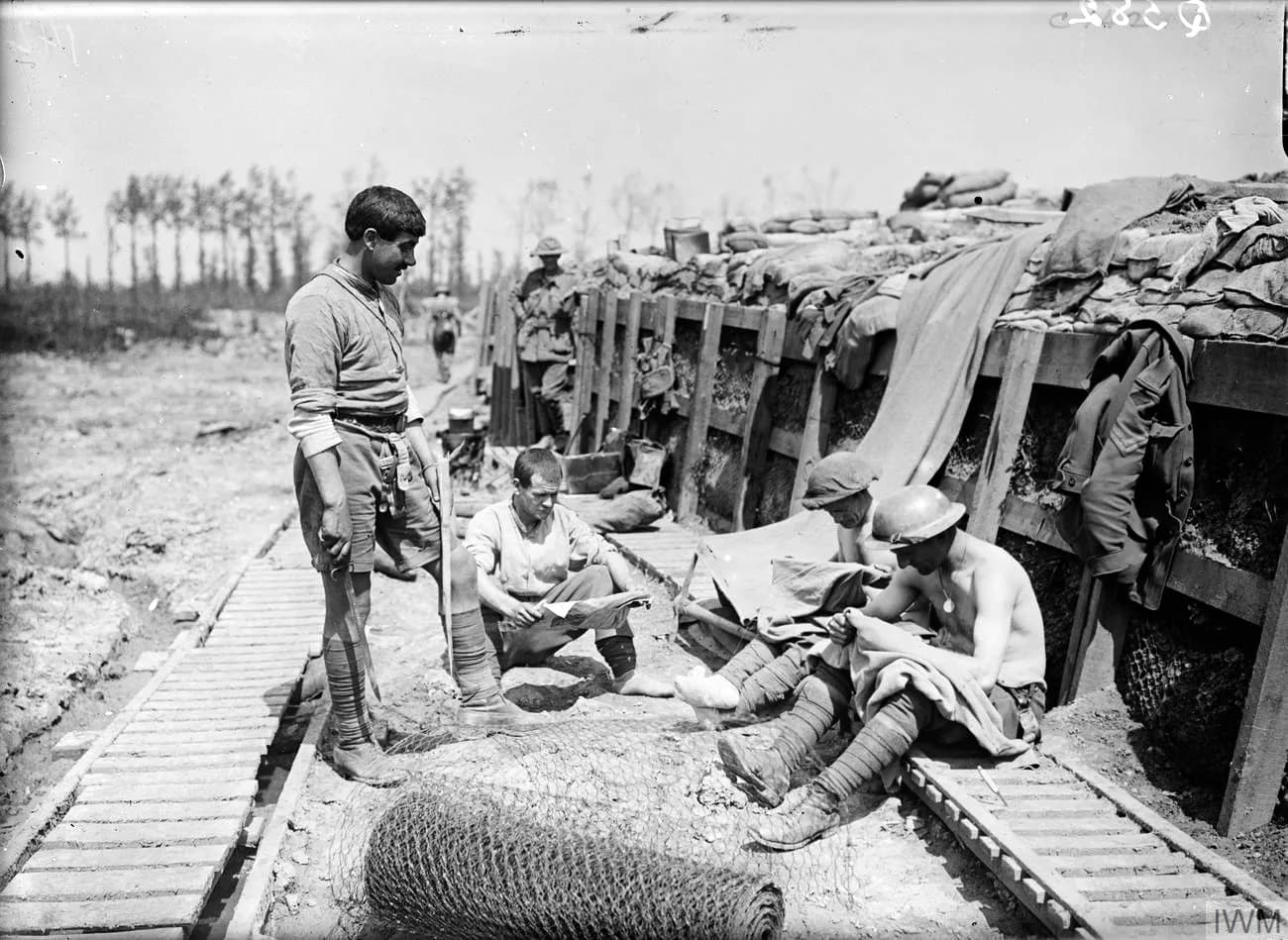
On 30 June 1916, the 11th, 12th, and 13th Battalions of the Royal Sussex Regiment climbed out of their trenches near Richebourg in northern France. Within five hours, 366 Sussex men lay dead in what remains one of the county's darkest days.
A Diversion Too Costly
The attack on the Boar's Head salient was planned as a diversionary raid. Less than 24 hours before the main Somme offensive was due to begin, British commanders wanted to distract German forces and prevent reinforcements being sent south.
The 11th, 12th, and 13th (Southdowns) Battalions formed the 116th Brigade of the 39th Division. Known as "Lowther's Lambs" after their recruiting officer Claude Lowther, MP for West Sussex, these were Kitchener's Army "Pals battalions" raised so that Sussex men could serve together alongside their neighbours, brothers, and friends.
The men were told little of their true purpose. They believed they were taking part in the main offensive. Most were not informed that their sacrifice was intended to draw German attention elsewhere.
The Morning Assault
The attack began at 3:05 a.m. following an afternoon bombardment on 29 June. The 12th and 13th Battalions led the assault whilst the 11th provided carrying parties in support.
Initial gains were made. British troops captured the German front line and briefly held the second line for approximately half an hour. Then the German counter-attack began with massed machine-gun fire.
The attack faltered on uncut barbed wire, smokescreens that blinded advancing troops, and a hidden dyke in No Man's Land that trapped men in the open. By 8:00 a.m., the surviving battalions were ordered to withdraw. The entire action had lasted roughly five hours.
The Devastating Toll
The casualty figures were catastrophic. According to East Sussex WW1 records, 366 men were killed; comprising 17 officers and 349 other ranks. Over 1,000 were wounded or taken prisoner. Total losses for the brigade reached approximately 1,366 men.
Twelve sets of brothers died together. The 13th Battalion was "almost entirely destroyed" with over 800 casualties. The 12th Battalion lost 429 men killed or wounded. Around 70 per cent of those killed came from Sussex.
The destruction was so concentrated that entire streets and villages across East and West Sussex lost multiple young men in a single morning. Communities from Brighton to Eastbourne, Worthing to Lewes were shattered.
A Posthumous Victoria Cross
Amid the slaughter, Company Sergeant Major Nelson Victor Carter distinguished himself. Born in Eastbourne on 6 April 1887, Carter was serving with the 12th Battalion.
During the withdrawal, Carter captured a German machine-gun post single-handedly and turned the weapon on the enemy to cover his comrades' retreat. He then repeatedly re-entered No Man's Land to rescue wounded men.
Carter was killed whilst carrying a wounded soldier to safety. He was 29 years old. His Victoria Cross, announced in The London Gazette on 9 September 1916, was awarded posthumously. His medal is now held at the Royal Sussex Regiment Museum at Eastbourne Redoubt. A blue plaque marks his former home at 33 Greys Road, Eastbourne.
The Forgotten Battle
The Battle of Boar's Head has been largely eclipsed by history. It does not appear in the Official History of the War. The commencement of the Somme offensive on 1 July 1916; with its own catastrophic losses, overshadowed the tragedy at Richebourg.
War poet Edmund Blunden, then a second lieutenant in the 11th Battalion, wrote of the battle in his 1928 memoir Undertones of War. His account captured the confusion and waste of the operation.
The Southdowns battalions were rebuilt after the battle, but they never regained their Sussex character. Replacement recruits were drawn from across the country. The Pals battalion system that had allowed Sussex communities to serve together was effectively ended by losses such as these.
Sussex Remembers
Memorials across Sussex now mark the centenary of the battle. Worthing's Beach House Park contains a memorial installed in 2016 with support from Chatsmore Catholic High School students. Brighton and Eastbourne also host commemorative sites.
The graves of the fallen are scattered across military cemeteries in northern France. Carter lies at the Royal Irish Rifles Churchyard at Laventie. Many of his comrades have no known grave; their names inscribed on memorials to the missing.
The anniversary of 30 June remains a day of remembrance for the Royal Sussex Regiment and for the communities across Sussex that lost their sons, brothers, and husbands in those five terrible hours.